Introduction: automation is no longer a luxury but a competitive necessity
The business world is going through an accelerated transformation. While automation used to be reserved for large groups with colossal budgets, it is now accessible and essential for SMEs and mid-sized companies. Many experts identify 2026 as the tipping point.
Why such urgency?
According to theBpifrance 2025 barometer, nearly58% of French SME leadersalready consider artificial intelligence (the engine of automation) a priority technology to integrate into their organisation(Source: Bpifrance Le Lab, 2025). This awareness, combined with growing technological accessibility, means that inertia will soon become a fatal handicap. The goal is not to automate everything, but to free human capital from repetitive tasks so it can focus on growth and strategy.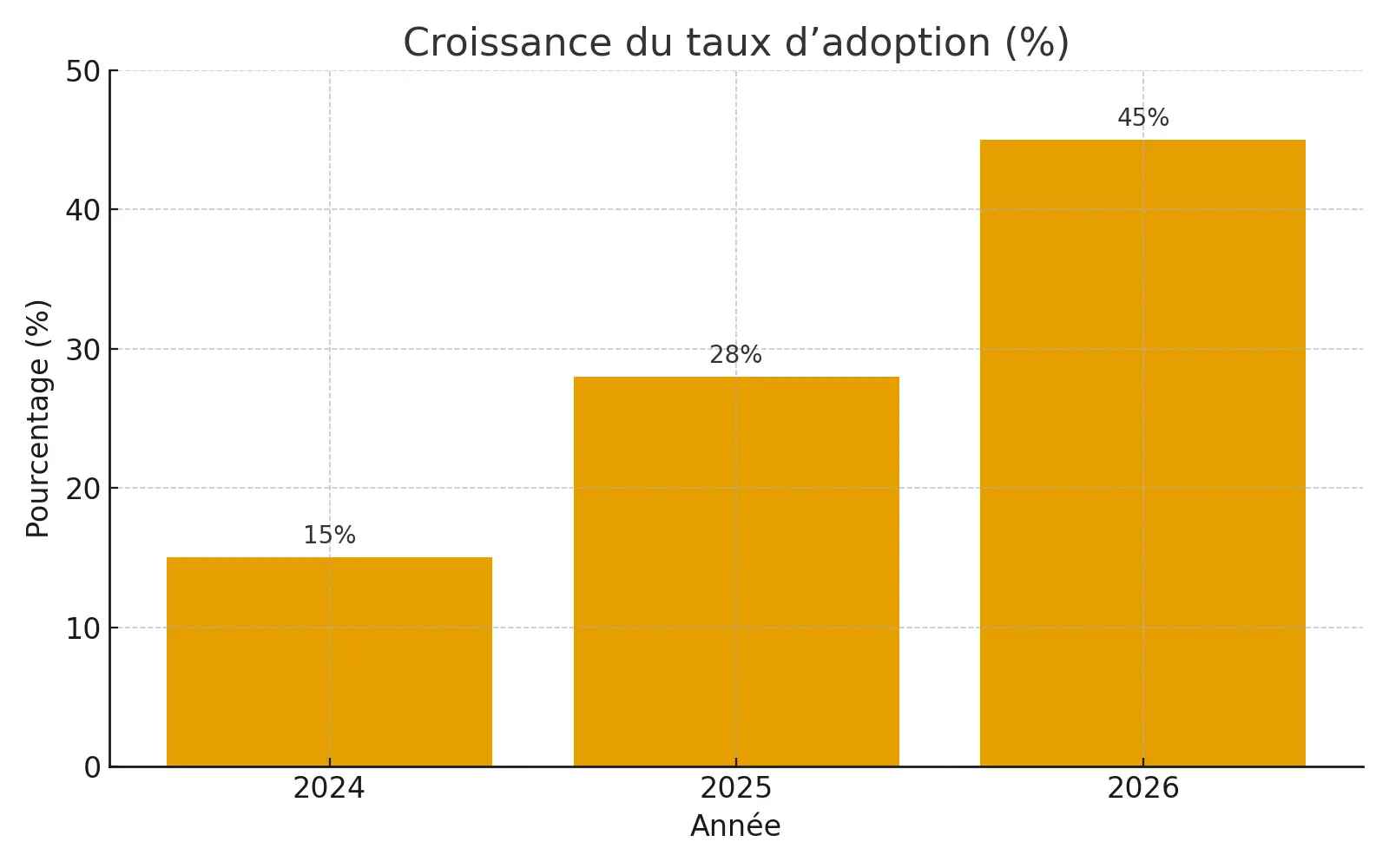
In 2024, around 15% of French SMEs had already set up at least one automated process (INSEE, Bpifrance).
By the end of 2025, nearly 28% of French SMEs will have automated at least one business process, according to combined projections from Bpifrance and international consulting firms.
By 2026, nearly one in two French SMEs will have automated a significant part of its business processes (OECD, Gartner, European Commission – market projections).
I. The cost of inaction: strategic slowdown
The first obstacle to SME growth is rarely a lack of ideas, but time wasted on low-value tasks. It is the hidden cost you pay every day.
1. Lost time
Productivity studies show that an employee can lose on average 60 minutes a day on data integration, validation and consolidation tasks between systems that require repeated human intervention.
For a team of 20 people, that is equivalent to three years of work wasted on unproductive tasks in a single year (Source: sector analysis of back-office processes).
This waste translates directly into:
- Costly errors: Manual data transfer between systems increases inconsistencies, which require time-consuming checks. The error rate can reach 15% on some critical processes.
- Catch-up costs: Every change (regulation, new product, market shift) requires heavy manual adaptation and data correction sessions, tying teams up on catch-up work instead of innovation.
2. The competitiveness gap
Lost time and errors are not just internal costs. They are the direct cause of falling behind the competition. SMEs that automate :
- Reduce their Time-to-Market.
- Improve the smoothness of the customer experience.
- Can absorb growth volumes without hiring immediately.
That is why 70% of SMEs will have to make the switch: automation is the only way to maintain the speed and reliability essential to survival in an ever faster market.
II. Business process automation (BPA): a 3-stage strategy
Succeeding with automation as an SME does not mean buying “magic” software, but following a strategic roadmap to link all your systems together.
1. Simplify before automating
The most common mistake is automating a bad process. The first step must be an audit: identify bottlenecks and highly repetitive tasks (such as lead scoring or managing reminders).
The gain: You aim for an ROI of 250% to 450% on targeted processes, avoiding overly heavy, all-encompassing projects.
2. Prioritise integration and action
The heart of automation is not reading data but transferring information between tools (CRM, ERP, accounting). AI is the engine; the exchange protocol is the road.
New automation technologies allow simplified integration, without disrupting your information system. They make it possible to link AI agents (autonomous programs that carry out tasks) to your existing tools, turning the reading of a piece of data into a concrete action (e.g. updating a status in the CRM, sending an alert, generating a payment).
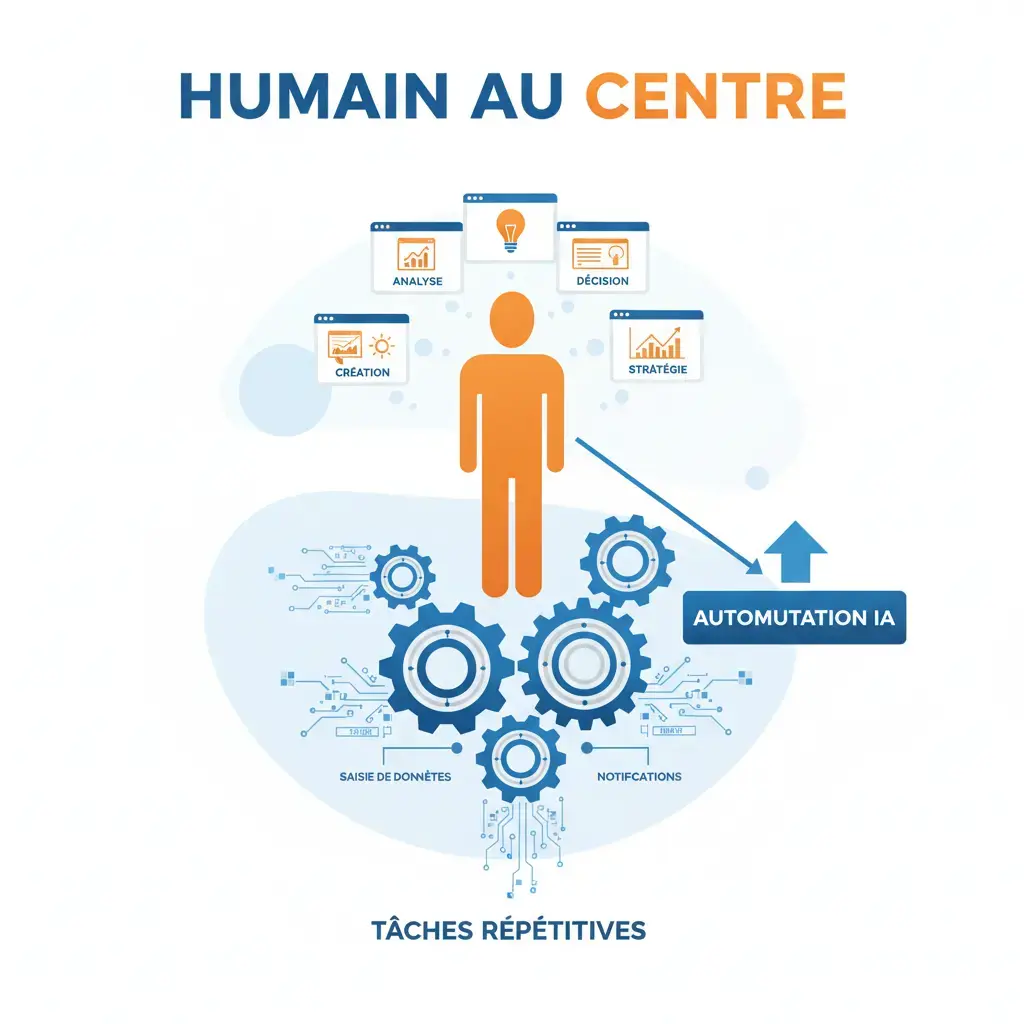
3. Free up human genius
The most effective automation is the one that lets teams refocus on what creates the SME’s added value: expertise, innovation and customer relationships.
- Sales manager: Moves from entering lead data in the CRM and managing manual follow-ups to predictive sales analysis, optimising customer strategy and coaching the team.
- CFO: Moves from checking data reconciliations, tedious dashboard consolidation and constant supervision of transaction flows to budget management, investment decisions, working capital analysis and margin optimisation.
- RH : Moves from CV screening to qualitative interviews and talent retention
Artificial intelligence becomes a co-pilot that handles the routine so that humans can handle exceptions and growth.
Conclusion: 2026, the year of decision
The figures are clear: adoption of AI automation is growing strongly among French SMEs and mid-sized companies. Those that do not take the plunge in 2026 will quickly find themselves lagging behind in operating costs, speed of reaction and attractiveness to talent.
The question is not whether you should automate, but how to do it well, without complexity and with a fast ROI.
FAQ
Why is 2026 a pivotal year for intelligent automation in French SMEs?
Three signals converge to make 2026 a tipping point. Technological accessibility: no-code tools have democratised automation, making it accessible without an IT team or an exorbitant budget. Accelerated adoption: from 10% of SMEs using AI in 2024 to more than 20% at the end of 2025 — the competitiveness gap with non-adopters is widening. Competitive pressure: SMEs that automate reduce their time-to-market, improve the customer experience and absorb growth without hiring.What is the hidden cost of inaction for an SME that does not automate?
The cost is higher than you might think. An employee loses on average 60 minutes a day on manual data integration, validation and consolidation tasks. For a team of 20 people, that is the equivalent of three years of work wasted on unproductive tasks every year. Add to that errors (rates of up to 15% on some processes), catch-up costs and falling behind competitors who have automated. Not acting means paying an invisible but growing cost.Will automation eliminate jobs in French SMEs?
No, it transforms them. Intelligent automation eliminates repetitive tasks, not jobs. A sales manager moves from manual data entry to predictive sales analysis. A CFO moves from consolidating spreadsheets to strategic budget management. An HR manager moves from CV screening to qualitative interviews. According to the ILO, AI is likely to create 10 to 13% more jobs than it eliminates. This transformation frees human capital for what really creates value: expertise, innovation, customer relationships.What ROI can an SME expect from a targeted AI automation project?
On well-targeted processes (invoicing, managing reminders, reporting, lead qualification), the ROI is 250% to 450%. For an SME, administrative automation projects generally break even within 3 to 6 months. The key: start with the most painful process, measure the gains, then expand gradually.How can an SME identify which process to automate first to maximise its ROI?
The method is simple: ask your team “Which task is the most repetitive, the most disliked and the most time-consuming every week?” That process is your ideal candidate. The best first automations are those that combine 3 characteristics: repetitive (at least weekly), rule-based (the same rules every time) and low in human added value.To guide your SME or mid-sized company through this transformation, it is essential to choose a partner who is an expert in business process automation and understands the specifics and challenges of your context.
💡 Your action plan:
- Identify your most painful process (invoicing, HR management, customer support…).
- Contact an automation expert: get a fast, costed diagnosis.
Ready to turn constraints into growth?
Book a meeting nowRead also
Our related solutions